
A colleague said to me last week: “I can’t believe it’s February next week, but somehow January also feels like the longest month of my life.” This so accurately describes my experience at the start of 2026. As individuals, and as a country, we are facing such grief, and shock, and anger, while also managing packed schedules and ongoing uncertainty. So many have expressed feeling utterly hopeless in the wake of 2025, and now the longest-ever January of 2026. I can feel the despair in the air, the deep exhaustion, and the frozenness of not being sure of what to do next. The problems we are facing are so big and seemingly out of reach.
I had a mini-disaster of my own in December, as I got in a major freeway car accident the day after Christmas . I am very lucky to be mostly ok – and honestly, I feel lucky to be alive. When I got home from the accident, I immediately got a call from my neighbor. She had noticed different cars at my house the last couple of days, and then saw me get home in yet another unknown car, so wanted to be sure all was well. She checked up on me multiple days after that. Another neighbor the following week saw me on the street with my dog and noticed that I was limping and asked what was up. Yet another neighbor stopped me while I was walking by to let me know that a car break-in had happened the night before, so to keep an eye out. There are no laws or systems that mandate this behavior: it’s simply kind people looking out for each other.
I was in Memphis for a conference last fall and had the opportunity to check out the National Civil Rights Museum before I boarded the plane home. It was a wonderful experience – seeing some of Martin Luther King Jr.’s lesser known speeches, bearing witness to the site of his murder, and following the long history of the civil rights movement. What struck me the most was a specific room, covered with mug shots of people arrested during the civil rights era. I recognized a couple individuals, but so many were regular people – I was struck to see so many middle-aged women like myself, clearly still in their work clothes, staring at the camera with fire in their eyes.
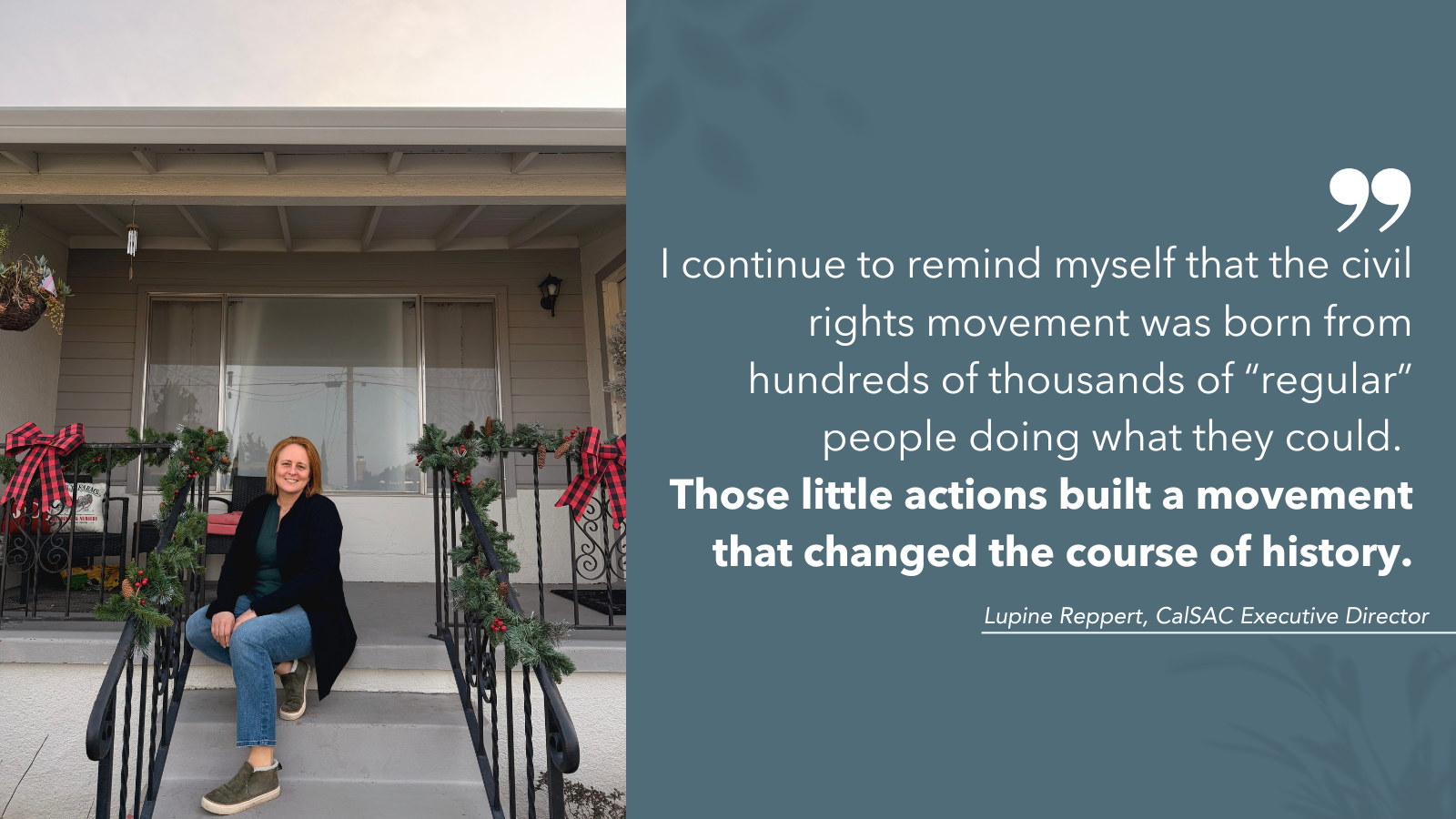
These experiences remind me that there is always something I can do, starting as small as what happens on my block. In fact, hyper-localism is a rising advocacy strategy – as neighbors support and defend each other in the face of major threats like ICE. And while this may seem insignificant, I continue to remind myself that the civil rights movement was born from hundreds of thousands of “regular” people doing what they could. Those little actions built a movement that changed the course of history.
It makes me curious what could be possible if we leveraged the collective power of our field – both to advocate for the work we do, but also to uphold the rights and needs of those we serve. How can we join together – as neighbors and community members – for what we believe to be true and right? We’ve been asking ourselves this question at CalSAC, and are cooking up some ideas alongside a number of partners about what might be possible – we hope you’ll join us in the work (stay tuned!). As a start, we’ve added a special pre-conference session at the Challenge called, "Leading with Courage and Clarity: The Future of Our Democracy,” led by CalSAC’s previous Executive Director Ruth Obel-Jorgensen, and are presenting two sessions at the NAA Convention on the same topic.
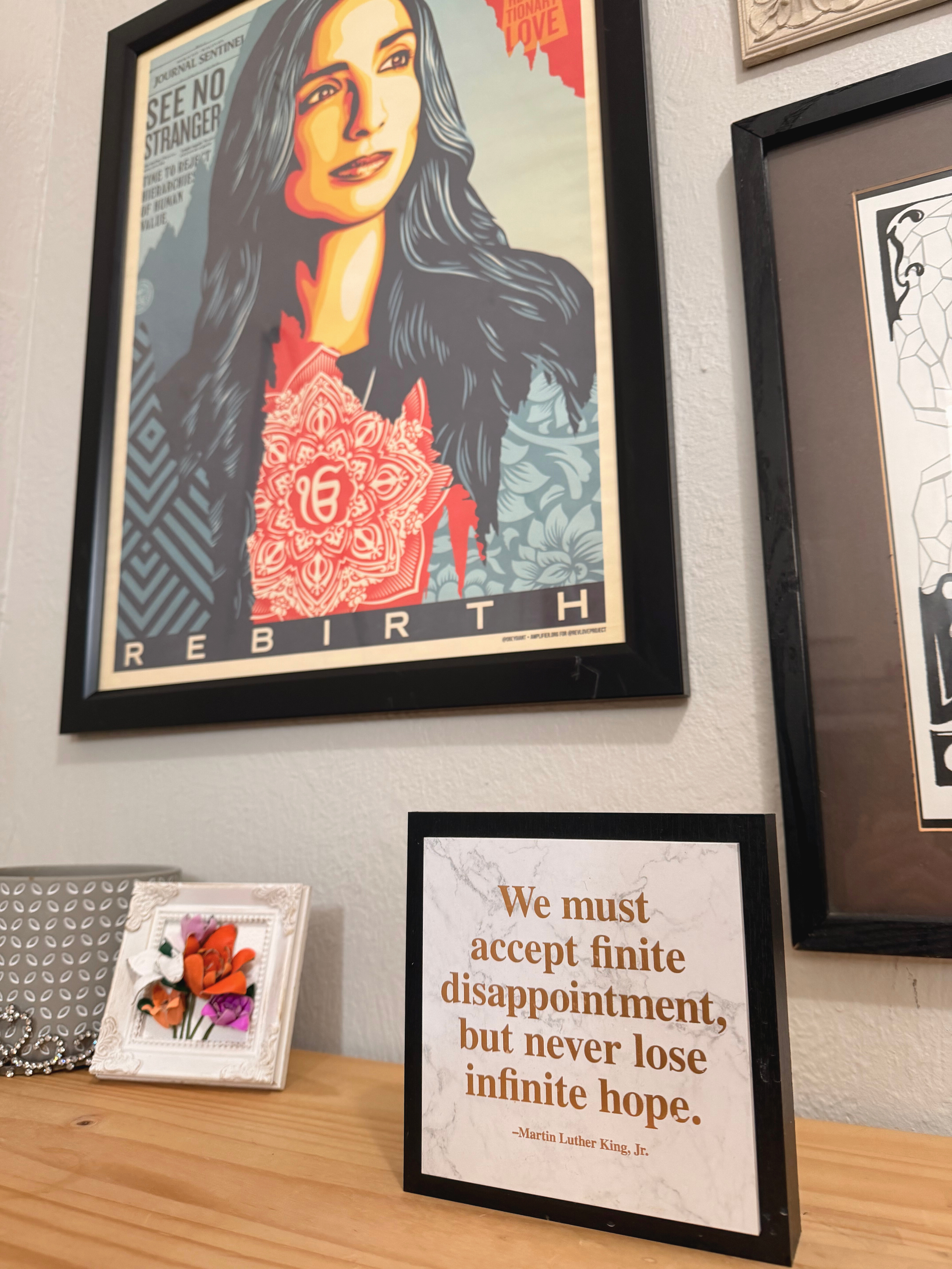
In the meantime, I’ll leave you with the wise words of Martin Luther King Jr., that I have on a plaque I got at the National Civil Rights Museum – now sitting in a prominent place in my home as an ongoing reminder: “We must accept finite disappointment, but never lose infinite hope”.
Ready for a year of resistance and community,

Lupine Reppert
Executive Director
(510) 444-4622 x109
lreppert@calsac.org